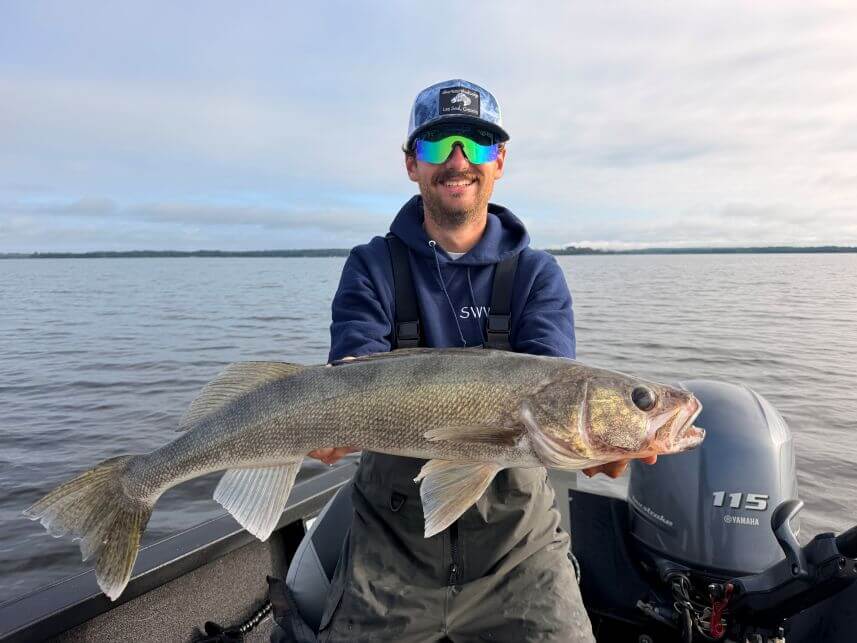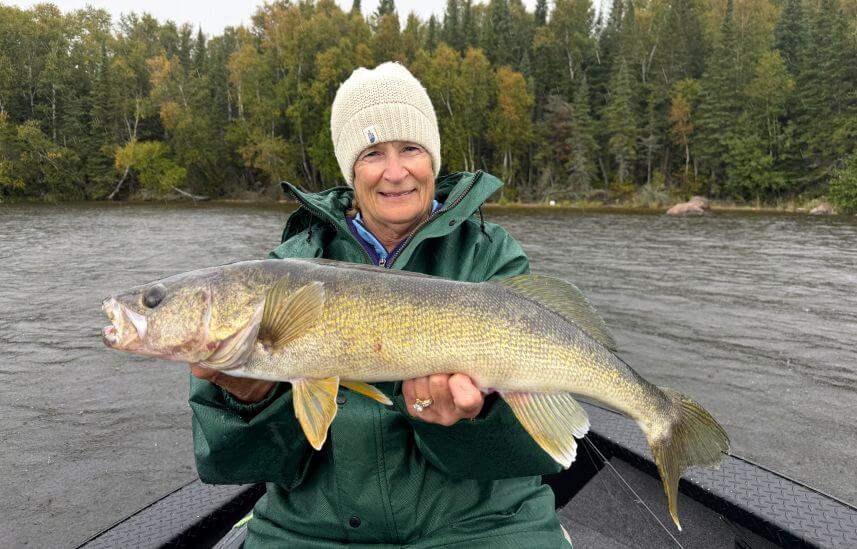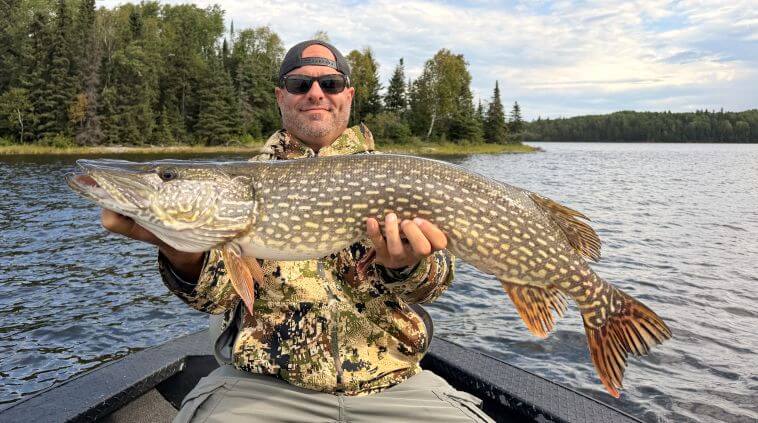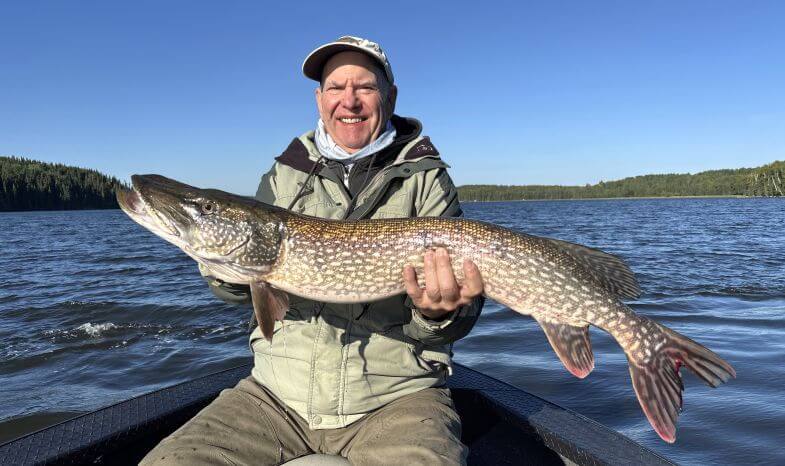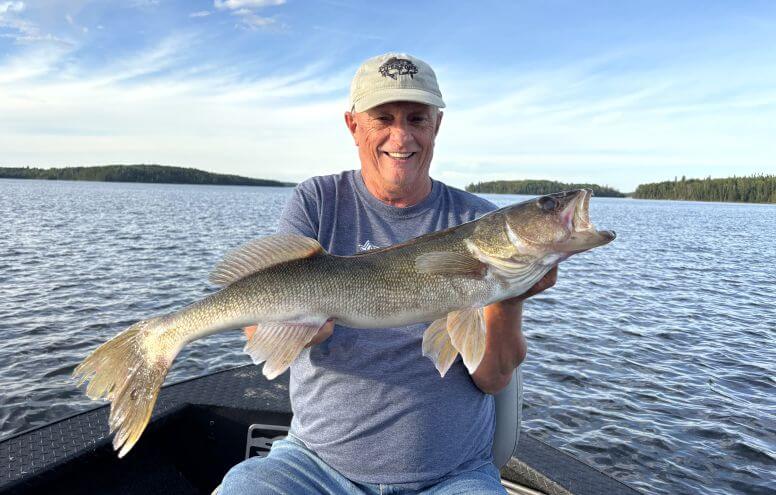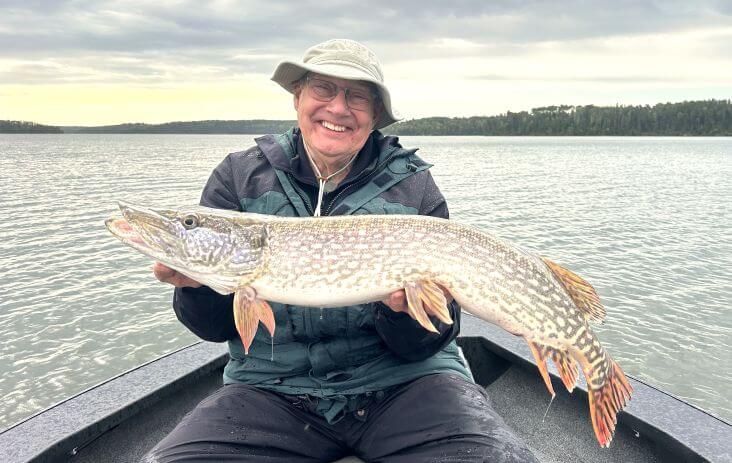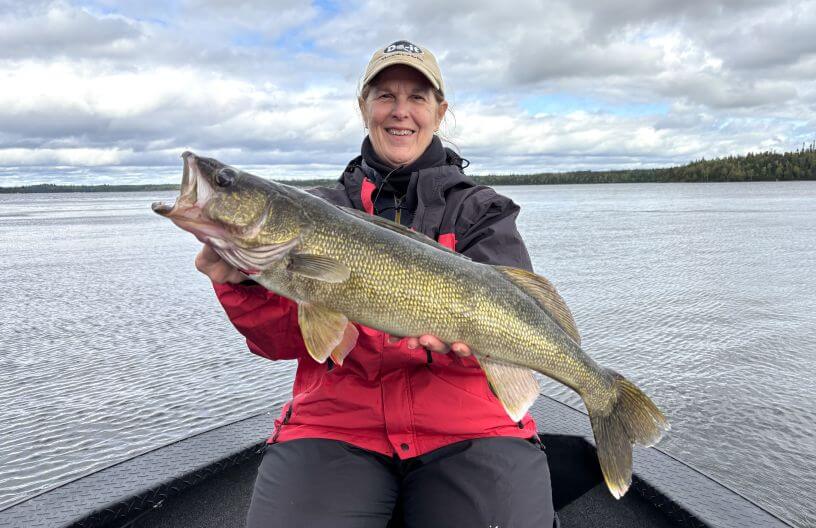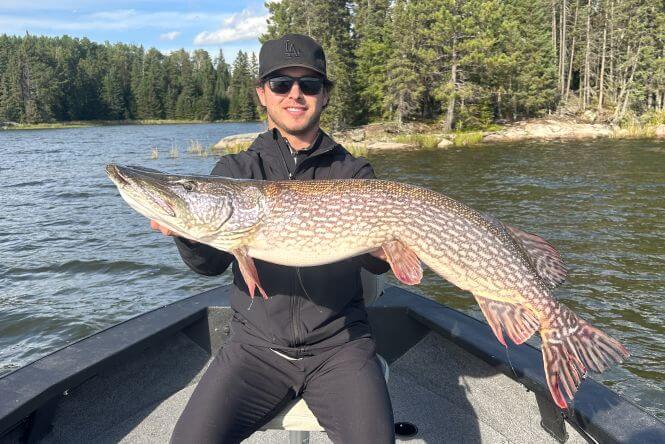

A mix of weather again this week. There were a couple of stable weather days and overall, it remained warm…ish. There were cold spells, but none lasted a whole day. There was some rain, but none lasted more than a couple hours. There was sun, but never for a whole day. There was wind, but not for the whole day. Wind switches a couple times a day were the norm.
A noticeable trend this week was a reversal in the way walleye usually respond to the weather. Throughout our season, our most productive bites usually come from stable weather days – meaning steady conditions and steady winds. Big weather changes – events like rain squalls or 180-degree wind switches tend to make our walleye more negative. So, when we see stable weather we as guides expect active fish and we move faster and more often. On weather downturns we expect to slow down and work on more negative fish. However, the exact opposite was true this week. Stable weather days led to negative bites, and we had to work hard for our fish. Weather changes and wind switches led to more active fish, and we had our best volume days then. The reasons for this flip and whether it will continue remain up for debate among our guide staff, and while knowing the “why” would be nice, the important part is recognizing the trend and adjusting to it.
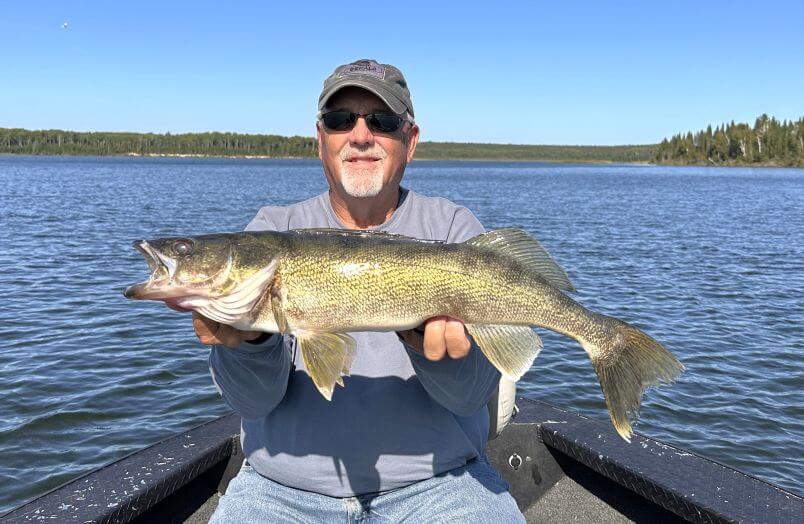
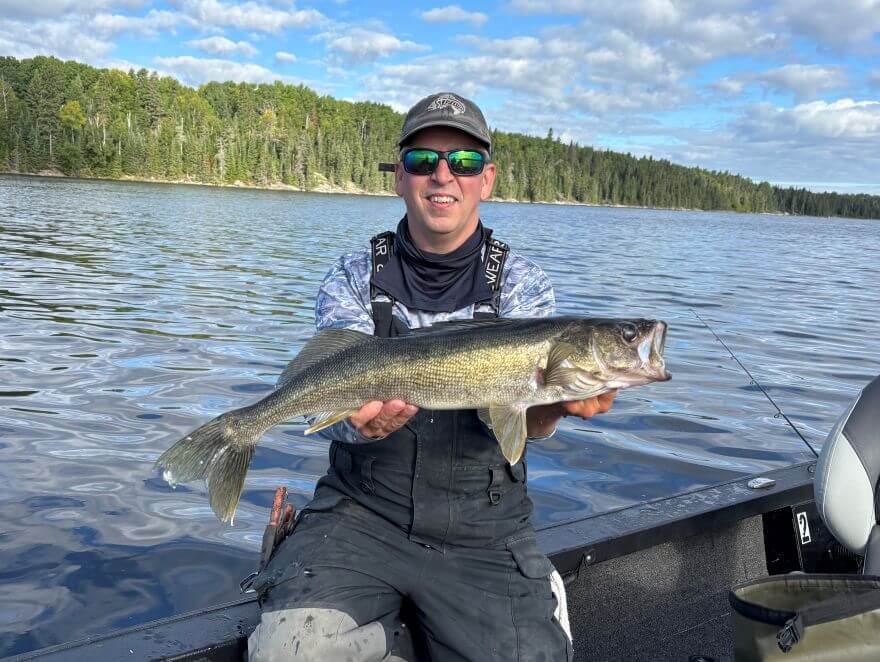
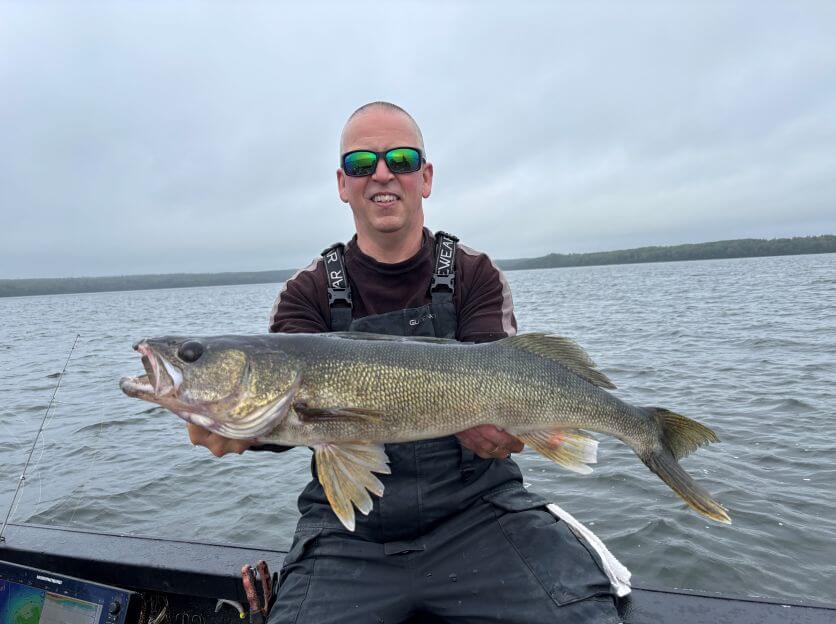
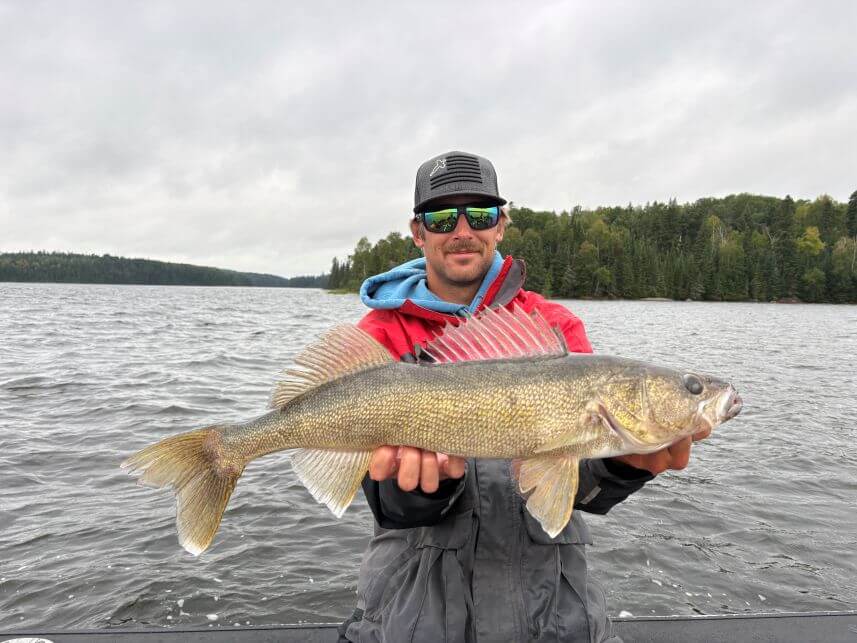
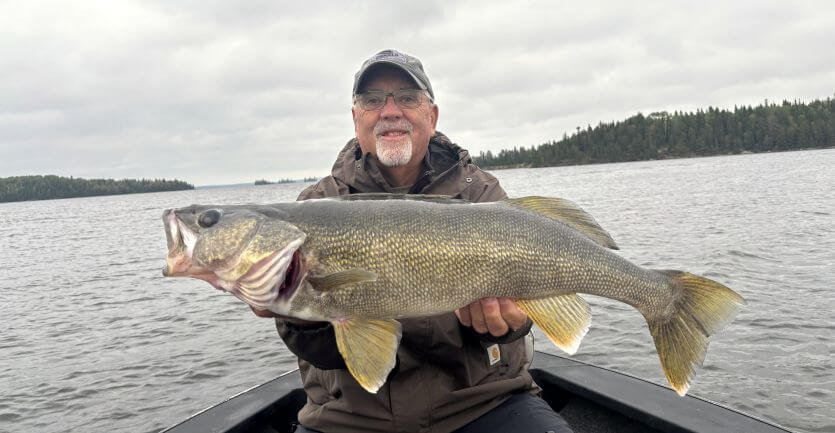
Walleye remained deep this week, most of our fish were caught between 30 and 40 feet. There were once again hints of walleye moving into a shallower fall pattern, but not enough yet for us to capitalize on and make a day of it. This week there were 52 guided days, and we caught and released 11 walleyes over 27 inches, including 2 – 30 inchers. Total daily catches varied widely, the weather change days had our best volume bites and the stable weather days had lower production. Guide sheets averaged 27 walleyes over 18 inches per day, and the highest daily total catch was 58 walleyes over 18 inches.
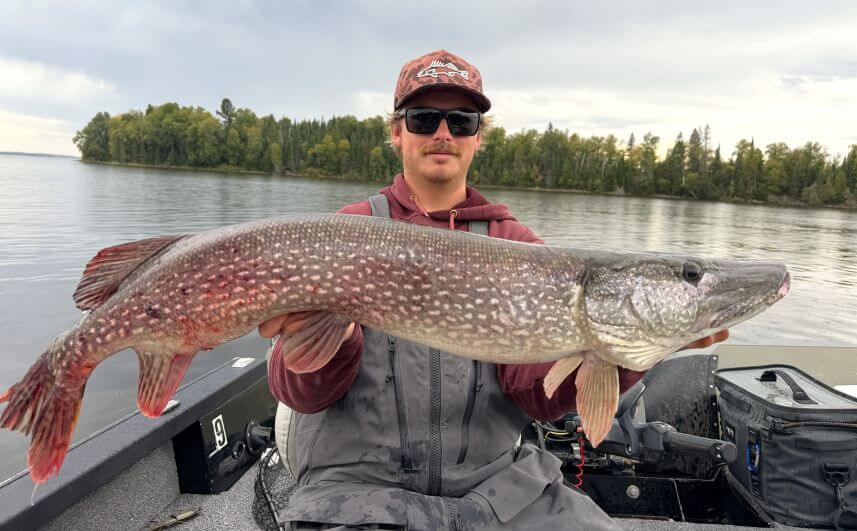
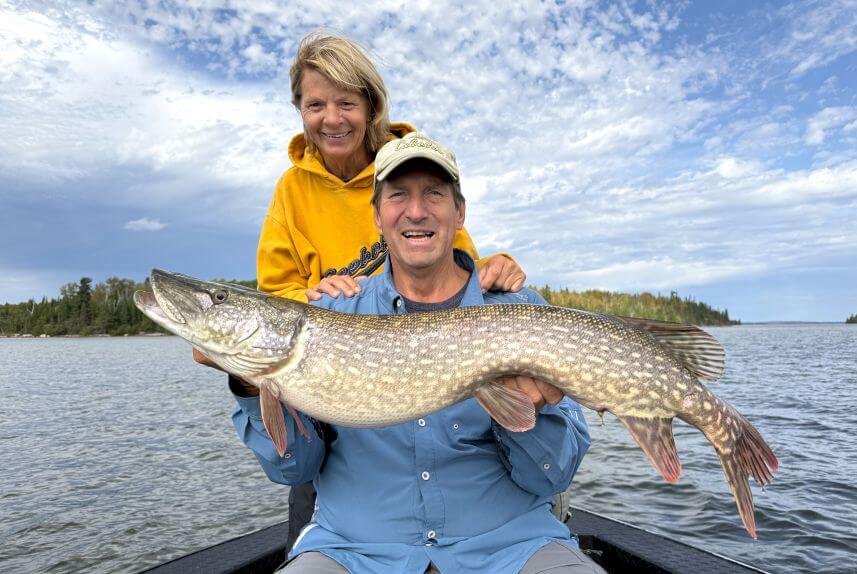
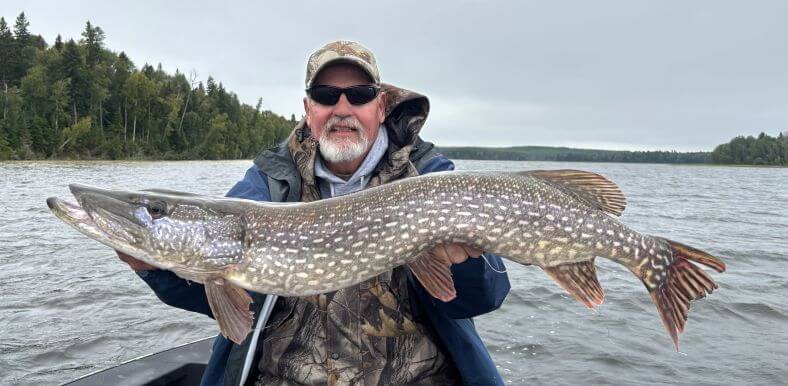
Piking effort was moderate this week, just a few guide boats devoted some hours to pike fishing in the afternoons. There were 8 Northerns over 37 inches caught and released, including 5 over 38 inches, with the biggest at 40 inches. The main lake weeds continued to slowly reduce in number, so we kept checking on fall pattern locations, but all our big fish still came from fishing the remaining summer weed beds.
Next week is bringing cooler temps, looking forward to seeing what changes that brings with it.